Offering a balanced path for spiritual transformation grounded in prayer and practice, drawing on the Christian contemplative tradition while respecting the diversity of experiences born from contemplative practices of other traditions.
2026-2027 Program Year
A Spirituality of Suffering and Solidarity
How do we cope with and respond to the suffering in our world? In our own lives? And what does it mean to be in solidarity with those who suffer? We begin with God…the God whom we sense is somehow participating in human suffering, instead of passively tolerating it. The prophetic path creates solidarity, first, by honoring the divine presence in each human being, and, secondly, orienting us to compassion, lament, and actionable response. This spirituality acknowledges the painful reality that the world is broken and that we are broken. In this we find our deep bonds with the wounded ones of our world, and with the Wounded Healer. And from that vulnerable place we find in our hearts the courage to have compassion.
“What are we to do about the troubles of the world? Well, Jesus calls us—his brash and troublesome disciples who question, doubt, and continually fail him—to take up the mantle of prophecy, to discern the signs of the times, and to be an ever-present balm in a troubled world…”
-Barbara Holmes, “Solidarity and Compassion,” 2023 Daily Meditations: The Prophetic Path, cac.org, April 11, 2023.
All sessions are offered in-person and online via Zoom, unless otherwise noted. Wednesday evening sessions are offered as Cathedral Commons and are therefore free and preceded by a community dinner at 6 p.m. ($8/adult; $25/family max).
God and the Alcoholic Experience: Suffering and Solidarity with the Addicted
1 in 6 Americans struggle with addiction at any given moment. Recovery and healing are found through solidarity with fellow addicts, forming community, and service to others.
On Spiritual Darkness
It’s easy to rejoice when we feel God’s presence: a moving service, a beautiful vista, an answered prayer. But when God feels absent, it’s another story. We can easily assume that we’ve failed God somehow, that God is disappointed in us or even angry. Spiritual darkness can be a hopeful sign that we are growing closer to God and more deeply connected to our neighbors.
A Saturday in Advent
What is the significance of the Word of God becoming flesh, and what difference can it make in our lives? Together, we will explore For the Time Being: A Christmas Oratorio by poet W.H. Auden and have time for both conversation and quiet reflection.
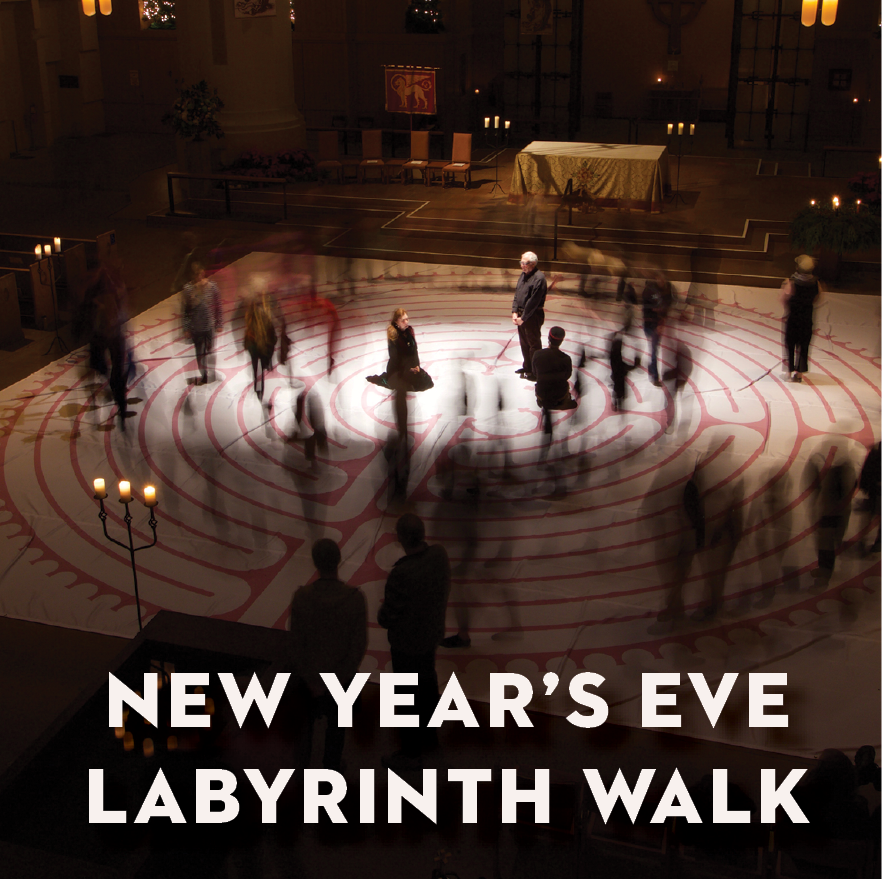
NYE Labyrinth Walk with Midnight Eucharist
As the old year passes and a new one begins, take time in the quiet, candle-lit space of the cathedral nave to pause, look inward, and experience walking a labyrinth.
Talking to God in the Whirlwind: A Sufferer’s Wisdom in the Book of Job
How are we to make sense of suffering when God so blithely allows the life of his servant Job to disintegrate into dust and ashes?
A Saturday in Lent
How do we notice all we have been given and respond with fidelity and gratitude? We will practice the spiritual art of awareness by reflecting individually and collectively on selected poems from Wendell Berry's poems about the Sabbath.
Co-reactors or Co-creators?: Christic Life in an Unfinished Universe
Facilitated by Ilia Delio, OSF, PhD Teilhard’s Christogenesis is the message of the Risen Christ inscribed on a world in evolution, yet our world hovers on the brink of death. We are to have faith in this messy world, peace in the heart, a spirit of forgiveness, hope in the future, and a zest for life. The God who is within and “ahead” of us, invites us to build our selves, one another, and the whole earth into a new … Read More
Sacred Words: Writing as a Healing Practice
Facilitated by Debie Thomas Theologian and priest Henri Nouwen described writing as a "true spiritual discipline" that can help redeem experiences of pain, hardship, and suffering. Through writing, we can reflect on difficult experiences, clarify our thoughts and questions, integrate our emotions, and offer up our words and stories to God, who is the Living and Loving Word. In this workshop, we will consider what it means to write as a practice of healing. Guided by free-writing exercises and prompts; … Read More
A Brush with God—An Icon Workshop with the Suffering Christ
Thursday, May 20, 6:30-9 p.m.; Friday, May 21, 6:30-9 p.m.; Saturday, May 22, 9 a.m.-4 p.m. Facilitated by Peter Pearson Byzantine Iconography is a highly structured and disciplined art form which combines prayer and painting techniques to create serene images of Christ, Mary, the angels and the saints following centuries old guidelines. Peter Pearson has been studying and painting icons for more than fifty years and teaching others to do so for over half that time. Participants will be invited … Read More
Past Sessions
When is Suffering Redemptive, and Who Decides?
Much has been written about redemptive suffering; that is, the possibility of suffering for the sake of justice or love leading to a greater good. Others counter that the concept is unjust and contributes to further victimization. We’ll question whether redemption is in the eye of the beholder and consider what roles grace and resurrection play in how we make meaning of our suffering.
Solidarity in Suffering: The Martyrs of Memphis, Frances Perkins, Jonathan Daniels, and Pauli Murray
We’ll examine the lives and ministries of faithful Episcopalians whose lives embodied solidarity in suffering. While they responded to their times, circumstances, and the deep needs of others in unique and profound ways, we can draw inspiration and practical wisdom in their remarkable stories and find resonances in the present day.
Wisdom School Plenary: A Spirituality of Suffering and Solidarity
How are we to respond to human suffering in our time? What does solidarity with those who are suffering look like? What does compassion, meaning ‘to suffer with,’ really mean in a world that has erected all sorts of diversions—the economies of war, wealth disparities, and constant entertainment? If we are created in God’s image, and if there is so much suffering in the world, then God, too, must be suffering.




Pilgrimage to the Land of the Holy One 2027
led by The Very Rev. Steven L. Thomason
Following in the footsteps of Jesus and our biblical forebears, we will journey as pilgrims seeking spiritual insight that converges in our Christian narrative and the current conditions for those who call this region home. We begin in Galilee, then move to Bethlehem and the West Bank before arriving at Jerusalem where we will stay in or near the Old City. More information will be provided when the registration goes live. Note: we will only make the journey if realities in the region are safe for us to travel there.
Looking for more?
Previous years' Wisdom School offerings are available on the Wisdom School Archive page.
Consider joining a cohort through the Center for Spirituality & Action.
Browse the Cathedral Calendar for even more opportunities like Cathedral Yoga, Compline, and additional prayer practices.


